Thursday, 26 April 2018

Week 19 - Community of Practice

Week 19...
Or is it
Challenging to keep on top of the learning with everything on top. I guess this is the same for everyone.
Activity 3: Contribution of Teacher Inquiry Topics to my Communities of Practice
Create a reflective entry where you critically reflect on how two potential and inspiring digital and/or collaborative learning related teacher inquiry topics would contribute to your Communities of Practice. Your reflection should be based on a reflective model of your choice.
Step 1:
The inquiry topics I have chosen are;
1: Using gamification to engage students with kahoot
2: Using blogging inside the classroom


The community that will support the success of the inquiry involve the senior syndicate at New Brighton Catholic. This group of teachers have a desire to see improvement in the students writing and are innovative and keen to build on their tools to do this.

The domain is in this literacy are. An evident need to up-skill the students in writing based on assessment and students own identification of their needs. The wider shareholders have a desire to see this improvement un engagement and results and have shown commitment to these goals.

The practice is catered to with teachers new knowledge gained during the first 18 weeks of mind-lab and an ability to share what works and research new ideas. The tools available include laptops and iPads to varying degrees of usability as some are older which allows children to collaborate together on devices.


The use of gamification to engage children has proven a good tool. The children are engaged and it can be set in stages using a range of skills, such as;
Questioning - creating questions gives the children direct ownership of the game and allows them to have success when playing as it is their knowledge and understanding used to complete in the games.
Collaborating - a lack of devices has allowed the children to work in pairs or small groups when competing or compiling questions showing the ability to have success with others.
Ability to be patient - many of our school virtues are addressed with the limited resources but particularly being patient, waiting for turns and contributing as a group member.

Blogging has engaged in other ways;
Recognising audience - the children post for a wider group than previously considered, such as parents, peers, wider community.
Pride in work - children endeavour to reach success criteria so they can be happy with what they have posted.

Step 2:
Other members of the community of practice have a greater access to technological tools and have shown more success in children's results. Having one to one would be a huge improvement and really encourage those reluctant writers who are hampered by difficulties getting ideas on paper and challenged with surface features of writing.


Christopher Pappas explains in his 'Science and the benefits of gamification in eLearning' (https://elearningindustry.com/science-benefits-gamification-elearning) article that the engagement helps students absorb what they are learning and commit it to their long term memory. The students feel immersed in what they are doing and it is fun.

To improve the issues with involving the these innovations in my writing program I need to ensure that the tools are prepared and able to deliver what my intentions are. This will come with involving others in my community of practice, namely IT support, and include these supporters in what I am hoping to achieve and how I am intending to do this.

Step 3:
When the initiative is intrenched in the classroom routine the children will be engaged and confident to deliver to a person. They will understand what is expected and each be able to contribute to this. The upgrading and setting of devices to cater to my plan will ensure there is no lag in delivery and the children will be able to expect consistency in this. When this is all in place and concrete in the classroom I feel this initiative will show great improvement of the children's learning.


References

Bozarth, J. (2017). Nuts and Bolts: Communities of Practice. Retrieved from https://www.learningsolutionsmag.com/articles/2400/nuts-and-bolts-communities-of-practice


Cavage, C. (2016). Utilizing an Online COP: Family, Community, School. Retrieved from http://blog.tesol.org/utilizing-an-online-cop-family-community-school/

Jay, J.K. and Johnson, K.L. (2002) Capturing complexity: a typology of reflective practice for teacher education. Teaching and Teacher Education, 18, 73-85.

Jurasaite-Harbison, E., & Rex, L. (2010). School Cultures as Contexts for Informal Teacher Learning. Teaching and Teacher Education, 26(2), 267-277.
Knox, B.(2009, December 4). Cultivating Communities of Practice: Making Them Grow.[video file]. Retrieved from https://www.youtube.com/watch?v=lhMPRZnRFkk

Pappas C. (2104) : The Science And The Benefits of Gamification In eLearning: 
https://elearningindustry.com/science-benefits-gamification-elearning


Saturday, 14 April 2018

Week 18 - Future-orientated Learning and Teaching

Week 18 - Future-orientated Learning and Teaching
This week I have focused on a specific elelment of my practice and how effective it may have been or is in my class. I have chosen the Gibb's model for reflection. (as it was recommended)

Focusing on theme 6 
New kinds of partnerships and relationships: Schools no longer
 siloed from the community

I chose this with several examples in mind from the activities of Room 3 this term. This idea of ubiquitous knowledge - generating activities appeals as these activities engage the children and inspire them to build and retain knowledge. This theme puts an emphasis on myself as the classroom teacher to connect with community resources and relate them to the intentions for learning in the classroom. Building these collaborative relationships with accessible experts calls on knowledge of what makes up our school community and local resources. This also builds buy-in from the community and connects them with the school, building strong links.

As I suggested above there were several examples of this partnership and relationship building through the term. On camp the children were inspired by an archery activity. Through internet research I found we were neighbours with an Archery club and I reached out to them to create a link and feed into the new found connection with the activity. We were afforded a visit later in the term with an expert from the club who shared his in depth knowledge of the activity and allowed us to see the more experienced archer in action. The children used independent activities to build questions and the majority were fully engaged with the presentation. From these questions I intend to extend children by having them create a kahoot.

This Kahoot idea was used to show children how they had built knowledge in our procedure work and tied in with my writing initiative from previous Mindlab assignments. I found a recipe for ANZAC biscuits and video to show the reason these were a good treat for soldiers in WW1. I approached parents to support in making biscuits and, after a few dead-ends, found 2 who were happy to help. The children were tasked to make 2 questions each relating to our ANZAC learning and these were compiled into a kahoot to extend fast finishing children who were adept at manipulating images and information.

Initially this activity felt like I had bitten off more than I could chew. Having parents to help was a relief as this part of the learning, I felt, was the pivotal engagement tool - hands on with a concrete product the children could enjoy. I was worried with the fast approaching term break that I wouldn't fit things in. At the end hearing a student say the Kahoot was easy allowed me to respond with would it have been easy 2 weeks ago and seeing his realisation that this was knew knowledge was very satisfying. 

Ensuring I was doing this to meet learning intentions was another challenge. Trying not to cover too much and focusing on writing with procedures. Letting children have ownership through the range of activities ensured they were engaged. 

Using parents was the only link to the community here. There expertise was with managing small groups and baking, not a large stretch but an experience many of my pupils may not have had and one that showed they were all engaged. 

This change showed how I could use a range of resources to engage the children in my class. The success of the learning showed the children they had learnt and the kahoot tool engaged them with gameification. Using this tool regularly will show the children the benefit of storing information they are taught and it gave the majority of the children success. The students were also able to show virtues when working with parents and build relationships. To use this tool more effectively in the future I may expose the children to their next learning steps.

References:

Bolstad, R., Gilbert, J., McDowall, S., Bull, A., Boyd, S., & Hipkins, R. (2012). Supporting future-oriented learning and teaching — a New Zealand perspective. Report prepared for the Ministry of Education. Retrieved from https://www.educationcounts.govt.nz/publications/schooling/109306

Finlay, L. (2009). Reflecting on reflective practice. Practice-based Professional Learning Centre, Open University. Retrieved from http://www.open.ac.uk/opencetl/sites/www.open.ac.uk.opencetl/files/files/ecms/web-content/Finlay-(2008)-Reflecting-on-reflective-practice-PBPL-paper-52.pdf


Sunday, 8 April 2018

Week 17 - Reflective Practice

Kia ora and welcome to my first reflective blog post.
It feels quite strange to be reflecting on reflecting but the valuable process outlined in the course notes have allowed me to realise that, while I lack the formal habits of writing my reflections, it is something I do all the time. It appears I am not alone in this as the survey results place in a fairly typical range.


1. Descriptive

When it comes to reflecting on my practice I tend to analyse events and outcomes. The truth of the matter is I tend to do this when something has not worked as I had foreseen it. I will play events over in my head and may take scratchy notes which serve to brainstorm ways to improve outcomes. I will invariably replay events following things through out the day and this becomes distracting rather than settling on a contingency and working with it. Generally these contingencies prove effective.
I often take these concerns or (sometimes) successes and discuss them with colleagues allowing another point of view to support me. These discussions tend to be more effective at easing my stress and offering other solutions, self clarification or reinforce my own thinking.
I am challenged by the time management of writing but see that if these things are playing in my head after the analysis then writing my forward thinking ideas may alleviate this stress.

2. Comparative
Looking at the survey results I see many people at a similar stage in their reflecting. Colleagues also express that they have trouble with recording reflections and the time factor is where this challenge is most represented.
I feel when I reflect internally and with peers that I am always looking forward, how can I improve outcomes. This is a type of reflection-in-action (Schon) and while it is good to think on your feet reviewing the outcomes and results (reflecting) post the event creates a deeper understanding and allows further improvements.
Improvement will come for me with setting specific times to reflect, either through a formal method like a blog or meetings with peers recorded in a minute format.

3. Critical Reflection
The implications for me are prioritising. Making sure I allow time to reflect and putting to the front of my routine. Positive outcomes will be less dwelling on issues and focused 'corrections'. Taking this time will also allow me to pin point things that work and ensure they are adapted to other situations.

Well Blog one done. Thank you for reading. I have included the course references as they all guided my thinking.

References
Finlay, L. (2009). Reflecting on reflective practice. Practice-based Professional Learning Centre, Open University. Retrieved from http://www.open.ac.uk/opencetl/sites/www.open.ac.uk.opencetl/files/files/ecms/web-content/Finlay-(2008)-Reflecting-on-reflective-practice-PBPL-paper-52.pdf

Jay, J.K. and Johnson, K.L. (2002). Capturing complexity: a typology of reflective practice for teacher education. Teaching and Teacher Education, 18, 73-85.

Larrivee, B. (2000).Transforming teaching practice: becoming the critically reflective teacher. Reflective Practice, 1(3), 293-307.


Yang, S., H. (2009). Using blogs to enhance critical reflection and community of practice. Educational Technology & Society, 12(2), 11-21.


Sunday, 11 February 2018

Week 9
Back to notes...

Where's John?
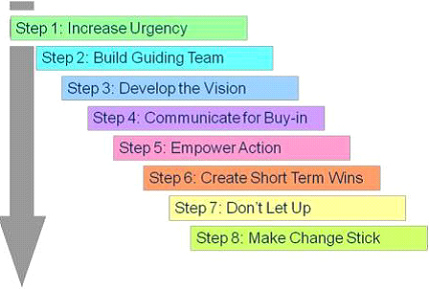
Who is John P. Kotter and where he might be right now.
Google, timestamp, out of box, evaluate information


- allows us to connect and collaborate with people beyond their physical environment.

Personal learning network: always easily accessible (the actual connections - environments - twitter...)

web 2.0

https://www.futurelearn.com/courses/learning-network-age/0/steps/24644


Image result for john p kotter 8 step model

ROSEY - PLN - really hard - more the people -
- friends - trained with -
- colleagues from other schools
- RTLB - advice and strategies
- Schoolmates
- Friends
- Family
- Jo Bollar - individual
- Facebook - NZ primary teachers
- Google
- TedTalks
- Podcasts

Present the information - try piktograph.cpm


Week 10 - Scrums breaking down tasks into small manageable pieces

Week 11:

Entrepreneurialism
We begin this weeks' session by asking questions such as what do entrepreneurs do? Who can be entrepreneurs? Why is this so powerful now? and what must we do as teachers?  Is there risk? Is it managed? Can everyone do it? 

The NZ Curriculum - Education for Enterprise
Education for Enterprise is about promoting an approach to learning – one that is real, relevant, and gives students responsibility for their learning.
The Vision of NZ Curriculum (2016) is for young people who will be creative, energetic, and enterprising, who will seize the opportunities offered by new knowledge and technologies to secure a sustainable social, cultural, economic, and environmental future for our country

Entrepreneurial Skills
According to Aileron (2017), the top skills every entrepreneur needs are
  • Resiliency. 
    • The ability to weather the ups and downs of any business since it never goes exactly the way the business plan described it. This skill enables the entrepreneur to keep going when the outlook is bleak.
  • Focus. 
    • After setting a long term vision, knowing how to “laser focus” on the very next step to get closer to the ultimate goal. There are so many distracting forces when trying to build a business that this skill is not easy to master.
  • Invest for the long-term. 
    • Most entrepreneurs are not patient and focus only on what comes next, rather than where the company needs to go. Overnight success may take 7 to 10 years. Entrepreneurs need to stop, pause and plan on a quarterly basis.
  • Find and manage people. 
    • Only by learning to leverage employees, vendors and other resources will an entrepreneur build a scalable company. They need to learn to network to meet the right people. Entrepreneurs strive to guarantee they will get honest and timely feedback from all these sources.
  • Sell. 
    • Every entrepreneur is a sales person whether they want to be or not. They are either selling their ideas, products or services to customers, investors or employees. They work to be there when customers are ready to buy. Alternately, they know how to let go and move on when they are not.
  • Learn. 
    • Successful entrepreneurs realize they don’t know everything and the market is constantly changing. They stay up to date on new systems, technology, and industry trends.
  • Self-reflection. 
    • Allow downtime to reflect on the past and plan for the future. Always working only leads to burnout physically and emotionally.
  • Self-reliance. 
    • While there is a lot of help for the entrepreneur, in the end, they need to be resourceful enough to depend on themselves.
How does this skill set map to other lists of skills we have examined on the course?

Social Entrepreneurship
Social entrepreneurship aims in some way to increase ‘‘social value,’’ i.e. to contribute to the welfare or well being in a given human community. The key to social enterprise involves taking a business-like, innovative approach to the mission of dealing with complex social needs or delivering community services. (Peredo & McLean, 2006; Pomerantz, 2003).

Social enterprise
Social enterprise is an organisation that applies commercial strategies to maximise improvements in human and environmental well-being - this may include maximising social impact rather than profits for external shareholders. Social enterprises are part of a continuum of enterprise types with different agendas. In class we will look at the akina.org.nz/ventures programmes and consider where they sit on this continuum.

Lean Canvas - Startup Vision
The Lean Canvas (e.g. leanstack.com) maps out a potential startup vision.
Lean focuses on problems, solutions, key metrics and competitive advantages, and promises an actionable and entrepreneur-focused business plan. 

Half-Baked.com
Dave McClure came up with the original concept of ‘HalfBaked.com: Entrepreneurial Improv Theatre.’
Act 1: Start by having people yell out 50 or so random words.
Act 2: Each team given 2 words + ".com"
Act 3: Teams have 10 min to prepare their BlankBlank.com business plan
Act 4: Each team does a 5 minute pitch on their product
Act 5: Vote on who did the best job
In class we will be doing an activity that has been developed by Nick Hindson and The Mind Lab PG team from this idea: Half-baked Lean Canvas which is in the media for this week.

The Mind Lab Process
Create teams of between 3 - 5 people. Gather 30 random words from the group. Each team then chooses 2 words.
1. Start by thinking of real problems that somehow relate to those two words, add that into part 1 of the canvas.
2. Think about who are having the problem you chose to look at. Who are being affected by that? Then choose your main customer group that you want to focus on.
3. Ideate some solutions. Write down your favourite one to your lean canvas. Prepare a 30 sec elevator pitch about your business idea.
Take turns pitching your business ideas. The team that pitches the idea must listen to feedback without replying. Other teams discuss things they 'wonder about' and 'like'.
4. Based on the feedback make updates. Then consider who are your early adopters (the ones that are easiest to market your idea to).
5/6. What channels will you use to reach your customers? (How will you market it?) What resources do you need? (Human, finance ...) How can you make the plan sustainable and possible?
7. Purpose. Why do you want to do this? Why is it important? What is the big purpose behind it?

The Mind Lab by Unitec - Lean Form
We've developed The Mind Lab by Unitec Lean Form that helps you to explain and critique your innovation plan in a lean way. We hope this is a useful tool for your DIGITAL 2 assessment. Note that although Digital 2 and Leadership 2 are submitted together, this week we are just focusing on the Digital 2 component.
Filling in the form and seeking feedback (and feedforward) from your fellow students might help you to explain the innovation and critique it. Remember to keep your answers Lean!
Once you have answered in class, you can view the responses from others and copy your own data to another document for reference.

Crowdfunding
With crowdfunding, an entrepreneur raises external financing from a large audience (the “crowd”), in which each individual provides a very small amount, instead of soliciting a small group of sophisticated investors. 
In class we will look at the crowdfunding projects shared at: tinyurl.com/TMLCFund
Provini (2014) provides the following ideas for how you might raise money for schools with crowdfunding: 
  1. Use crowdfunding for specific projects or needs, rather than general fundraising
  2. Identify a safe, flexible and transparent platform
  3. Start with reasonable goals
  4. Break large projects into smaller steps
  5. Prepare workgroup members to do intensive marketing
  6. Marketing messages matter!
  7. Target different levels of donors (alumni, community members, parents, local business owners, etc.)
  8. Consider offering rewards and incentives for larger contributors
  9. Offer students leadership opportunities and take advantage of teachable moments
Crowdfunding in New Zealand
Davis (2014) provides a useful guide to crowdfunding in New Zealand. One of the crowdfunding platforms he mentions is PledgeMe, who have created a Crowdfunding Canvas to help potential applicants (see tinyurl.com/TMLPMCC).

Some other platforms include
Building an understanding of business
More and more young people are using crowdfunding platforms to gain public support to seed fund new start ups and early expansion plans for businesses.
Other ideas that students can use to build an understanding of business, entrepreneurship, marketing, target markets, sales, budgeting and economics include:
  1. Creating a online shop on a low cost platform such as etsy.com. Online shops can allow students to sell items as diverse as art, crafts, digital assets such as Minecraft characters and simple services eg. car grooming, garage sorting, pet minding etc
  2. Set up a school-wide or community-based pop-up fair where parents with businesses can sell slow moving or end of line products by hiring a stand where the community can shop.
  3. Create a community garden at the school and grow vegetables for sale at farmers markets or to parents. Choose seasonal items that make for great after school snacks (for parents to buy) such as strawberries and carrots.
Resources for teachers and students
Young Enterprise offers a range of enterprise programmes and financial literacy resources that can be used by teachers throughout New Zealand. Each resource is designed for a specific age group, and aligns to the New Zealand Curriculum. www.youngenterprise.org.nz/

References:
Aileron. (2017). The Top Skills Every Entrepreneur Needs. Forbes.com. Retrieved from http://www.forbes.com/sites/aileron/2013/11/26/the-top-skills-every-entrepreneur-needs/
Davis, V. (2014, Feb). The ultimate guide to crowdfunding in New Zealand. idealog. Retrived from https://idealog.co.nz/venture/2014/02/ultimate-guide-crowdfunding-new-zealand
Peredo, A. M., & McLean, M. (2006). Social entrepreneurship: A critical review of the concept. Journal of world business, 41(1), 56-65.
Pomerantz, M. (2003). The business of social entrepreneurship in a ‘‘down economy’’. In Business, 25(3).
Provini, C. (2014). Raise Money With Crowdfunding: Top 9 Tips for Schools. Retrieved from http://www.educationworld.com/a_admin/crowdfunding-fundraising-schools-tips-best-practices.shtml

The NZ Curriculum Online. (2016). The NZ Curriculum: Vision. Ministry of Education. Retrieved from http://nzcurriculum.tki.org.nz/The-New-Zealand-Curriculum  


Wednesday, 20 December 2017

Week 5 notes - where are the crew?

Signed in -

pechaflickr:   6 second - pictures to reflect on specific topics -

Knowledge -
Sharing knowledge - with peers
Using a profile to build awareness
Experience - real life
Guardianship - distressed - time to
Being fun
pride
success - mentor
voice -
confidence simple - mobile
consideration - legal
team - range of skills
pieces to form big picture
knowledge - power conspiracy theory
power - control
believe - faith
voice
security -
model - follow - media choice
team work - roles sharing - many hands make light work

Culture -


_________________________________________________________________

Leadership 1 assessment -
Analysis of initiative - leadership v success of project
Plan leadership of future change - use digital 1 - implementation plan
Identify leadership theories - used and evaluate effectiveness


Video - Leadership theories
Posting to google community

Notes on situational leadership

Leadership quiz


Theories                 -             Styles           -              Attributes


Emotional intelligence:
 Daniel GOleman


Self awareness
Self regulation
Motivation
Empathy
Social skills


Created a collage to show one example


Assignment - assessment breakdown


Early adopters -
Early majority implementors -
Leadership plan for digital 1 - implementation - plan to lead plan

Digital 1 links with digital 2! (All can link)

3D modelling and printing
What has it changed?
What will it change?
Is it disruptive?


Sunday, 3 December 2017

Week 4 Mindlab

Here we go - reading notes below - a bit rough - hard to read off computer;

Something done creates a result - reward/feedback to - positive reinforcement

Teacher - as facilitator

Connectionism - 

Dewey: Progressive - self governing - teacher guides, OE, hands on - something to do not something to learn

Vygotsky: social ZPD, help from others - 

Piaget: COnsturctivism - 4stages
Educational environments - promote discovery - new things not repeating - knowledge constructon social concept

Bandar: SCT
Teachers - models - media effects

Seely Brown: performance in situations - instead of knowledge

Papert: Constructionism - learning by doing - electronic media

Lave, Wenger: Community of practice - collaborative

Siemens: Connectivism - share learn information


Aware of what is happening - unable to keep up


Research informed teaching - shaped by research


Do not make any conclusions based on one piece - you need evidence
Meta analysis - more evidence = better theory


Leadership article
  1. Research -led,  where  the curriculum content is  based on the research  interests of teachers
  2. Research-oriented, where the process of
learning content is seen as important as the content itself and hence, an
emphasis on learning inquiry skills
    3. Research-based teaching, where the curriculum  is based on inquiry-based  activities rather than acquisition of content
4. Research-informed teaching, which consciously draws on systematic inquiry into the teaching and learning process itself.

The fourth point is the most important point of the article. Practice is research informed, research shapes our practice. In class notes

  • Article acknowledges that teaching is a private affair what we know about how people teach comes from self description.
  • Despite wanting to student driven classrooms are often teacher-led
  • Teachers often teach not on their beliefs but how they were taught.
  • Our teaching techniques do not relate well to current research
  • There is  commonality across teaching of key important things to do as a teacher - managing relationships etc
  • We need to ask what research we need to base our teaching on? Best available research, using qualitative and quantitative data


In class  notes

What is the relationship between leadership and research?
Why might a leader need to be research-informed?

  • We rely on the leader to know best, don’t want to be in a time warp, be informed in our teaching. We need to be aware with technology changes and changes that impact on teaching.
  • Teaching practice is informed by the best thinking available, best thing we can do.
  • Article talks about how we are not familiarity with majority of thinkers in the education thinking, this is unusual in other area such as medicine.
  • Do not make any conclusions based on a single study - in research everything works in regards to the preponderance of the study. Reflect on the research, see if it is confirmed by other research or relates to your context.
  • Visible learning, blended learning - key meta research
  • Better to base teaching on research rather than on the way we were taught.
  • The Dr Fox lecture - good example of not questioning and being critical, otherwise can be fooled.

Knowledge is Adaptive

“Francesco Sizi ridiculed Galileo’s findings. There must be seven planets, Sizi said. After all, there are seven windows in the head - two nostrils, two ears, two eyes, and a mouth. There a seven known metals. There are seven days in a week, and they are already named after the seven known planets. “ If we increase” the number of planets, he said, the whole system falls a part.

“What is self-evident today is tomorrow’s fallacy or tale of ridicule.”


Top ten learning theories for digital and collaborative teaching

Assessment - real world problem solving - maths students struggle to connect and retain their learning because they can’t see real world context

Introduce self, then problem look at what the literature says about it, make sure you introduce the proposed outcomes, then outline the solutions and say which one you are doing due to your context what solution you will choose.
Look at 21st century skills and the rubric.


Meme -


APA - referencing - do it as writing - quick notes
Word - APA reference option.

Reference - manager - record

Searched the library


kotahitanga - Greater together - 
Maori - ideals of collaboration - 


Coding in electronics - starting with the problem
Scratch


Monday, 27 November 2017

Week 3 Mindlab

Week 3 beginneth...

Catch up building goggles - pretty straight forward with Rosey's expert help.

Established distance from course is 32km 4 more than nearest traveller who got the opposite way.

Models of integration - SAMR
TPACK


SAMR - in 2 minutes


TPAck


Created a learning activity  - lasting 20 minutes - working together

https://docs.google.com/document/d/1cAMFA2QkxV9CiWDiLABfAeubN54TVTDPvRuy527KjwA/edit?usp=sharing_eip&ts=5a1b888d


Conditions of classroom innovations - Heres a tool - make it work

Examples of activities - Tallest mountains


Record - issues in the class

ITL - Rubrics that are helpful - 21st century skills


Technology disruption and mixed reality
Tech doesn't hang around for long


Auras - different way


  Korea – Day one   After a challenging overnignt flight I touched down at Incheon Airport. A cruise through customs and then I met Philip, ...